
Safe Haven IT perspective: Technology should reduce friction, strengthen resilience, and support the organization’s goals. The following guide is written for business and organizational leaders who want practical next steps without unnecessary jargon.
Start With Risk, Not Products
Cybersecurity is easier to manage when it is treated as a business-risk program rather than a shopping list. NIST Cybersecurity Framework 2.0 organizes outcomes into six functions: Govern, Identify, Protect, Detect, Respond, and Recover. That is a useful way for smaller organizations to structure the conversation.
Govern: Decide Who Owns Cybersecurity
Assign responsibility. Identify legal, contractual, insurance, and operational requirements. Decide how leadership will review cyber risk and how vendors will be evaluated. Policies should reflect how the organization actually works rather than sitting unread in a folder.
Identify: Know What You Depend On
Maintain inventories of devices, users, cloud services, important applications, data, and vendors. Identify systems that would seriously disrupt operations if unavailable. You cannot protect assets you do not know exist.
Protect: Put Strong Basics in Place
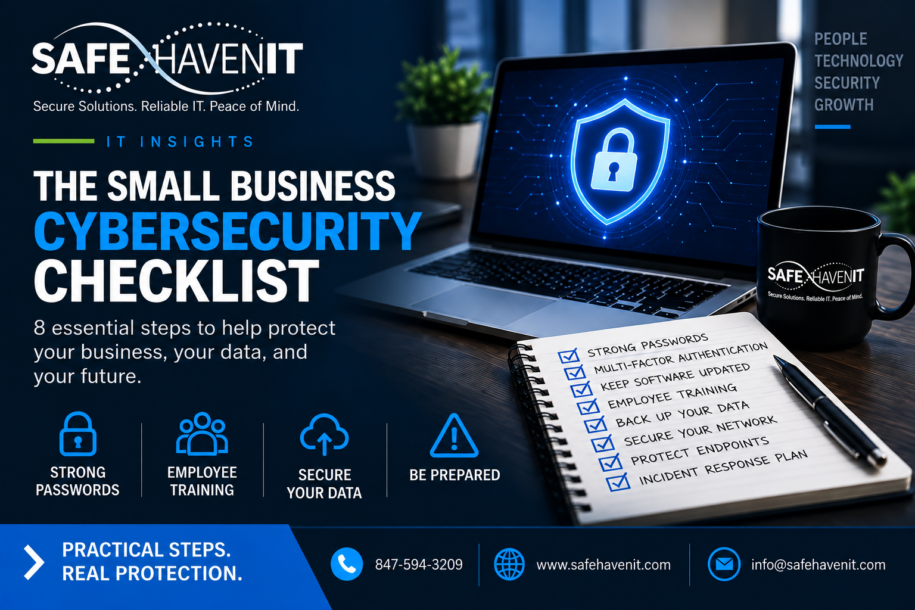
Require multifactor authentication where possible, especially for email, remote access, and administrative accounts. Keep software patched. Use appropriate endpoint protection. Apply least-privilege access. Train employees to recognize phishing. Encrypt sensitive devices and data where appropriate.
Detect: Make Suspicious Activity Visible
Security controls should generate useful signals. Review important alerts and logs, watch for unusual sign-ins and administrative changes, and make sure someone is responsible for investigating meaningful events.
Respond: Know What You Will Do
Document who should be contacted during a suspected incident, how affected systems can be isolated, who makes business decisions, and how legal, insurance, customer, or regulatory communications will be handled. An incident is a poor time to invent the plan.
Recover: Prepare to Restore Operations
Maintain backups appropriate to the organization, protect them from unauthorized changes, and test restoration. Identify which systems must return first and what temporary business processes may be needed during recovery.
A Practical First 30 Days
For many organizations, a useful first month includes enabling MFA, reviewing administrator accounts, verifying backups, patching critical systems, documenting key assets, confirming endpoint protection, reviewing email security, and establishing a basic incident contact list. Then continue improving based on risk and business priority.
Where Safe Haven IT Can Help
Safe Haven IT helps Chicagoland organizations improve day-to-day technology support, cybersecurity, Microsoft 365, cloud and backup, and long-term IT planning. If you would like to discuss the issues in this article in the context of your environment, start with a conversation rather than a product list.