
Safe Haven IT perspective: Technology should reduce friction, strengthen resilience, and support the organization’s goals. The following guide is written for business and organizational leaders who want practical next steps without unnecessary jargon.
Why Offboarding Deserves a Formal Process
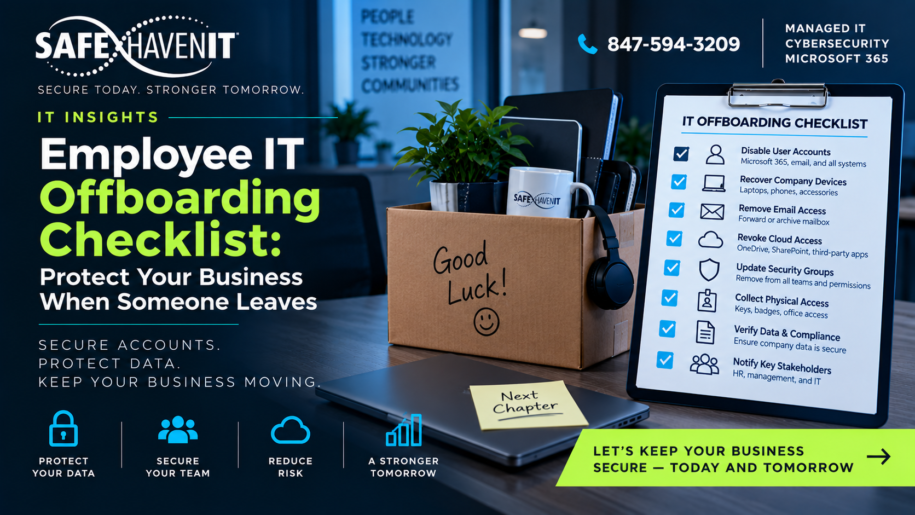
Departures can be routine, urgent, voluntary, or involuntary. In every case, the organization needs a repeatable process that protects company information while preserving business continuity. HR, management, and IT should know their responsibilities before a departure occurs.
1. Confirm the Effective Time
IT needs the exact date and time access should change. For sensitive departures, coordination may need to happen immediately and discreetly. Avoid vague instructions such as sometime Friday.
2. Disable Identity and Remote Access
Disable or block sign-in to the primary identity account, email, VPN, remote desktop, password manager, and other critical systems according to policy. Do not rely on changing one password if the user has access to multiple services.
3. Review Cloud and Application Access
Employees may use CRM systems, accounting platforms, file-sharing services, line-of-business applications, social media, vendor portals, and other SaaS tools. Maintain an application inventory so these accounts are not forgotten.
4. Recover Company Devices
Collect laptops, phones, tablets, security keys, access cards, removable media, and other equipment. Record condition and ownership, then securely prepare devices for reassignment or disposal according to policy.
5. Preserve Business Information
Determine whether mailbox access, OneDrive or other files, shared documents, contacts, and project information must be transferred to a manager or replacement. Follow legal and retention requirements rather than deleting data automatically.
6. Handle Email Continuity Carefully
Organizations may need an automatic reply, delegated mailbox access, or another continuity measure. Avoid forwarding everything indefinitely without considering privacy, security, and retention implications.
7. Rotate Shared Credentials
If the departing employee knew shared passwords, door codes, service credentials, or other secrets that cannot be individually revoked, change them. Better yet, reduce shared credentials over time by using named accounts and centralized password management.
8. Document Completion
Use a checklist with owners and timestamps. A completed offboarding record helps demonstrate that access was removed and equipment was recovered, and it makes future audits and troubleshooting much easier.
Where Safe Haven IT Can Help
Safe Haven IT helps Chicagoland organizations improve day-to-day technology support, cybersecurity, Microsoft 365, cloud and backup, and long-term IT planning. If you would like to discuss the issues in this article in the context of your environment, start with a conversation rather than a product list.